
💰SoftBank acquires hard assets
3 mins.
Welcome back!
Hope you had a great holiday season. As we roll into the new year, the AI world is stepping on the gas, most recently with OpenAI’s new prompt packs and SoftBank’s big-ticket move.
Let’s dive in.
On deck:
◾ Open AI Releases Prompt Packs
◾ SoftBank buys DigitalBridge
◾ Jasper vs Copy.ai
◾ Creating Applets to simplify your workflow
◾ 10 other AI news updates worth your attention
📡Signal behind the buzz🔊
Decoding trending AI stories.
📍Open AI Prompt Packs
🔊Buzz:
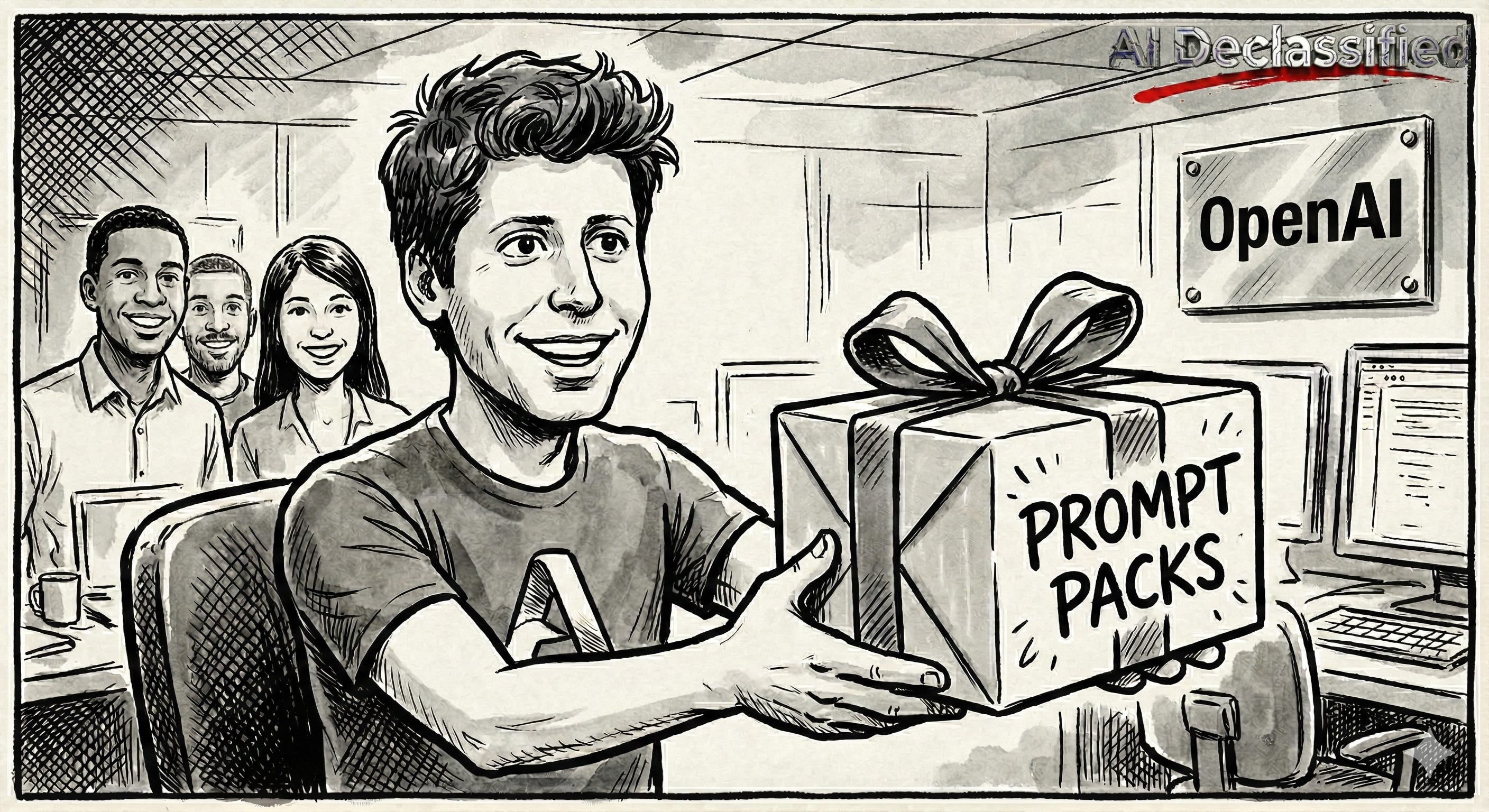
OpenAI’s Academy hosts newly released collections of “Prompt Packs”: ready-to-use prompts organized by role and task, like onboarding plans for customer success, or recruiting workflows for HR. Some are claiming it’s a “new feature that makes ChatGPT smarter overnight.”
📡Signal:
Prompt Packs are best understood as curated templates, not a new model. Their real power is structure: good prompts specify the goal, the inputs needed, the audience, and the format of the output, so results are more consistent and easier to critique.
🎯Impact:
Use Prompt Packs like training wheels. They’re great for repeatable work, but they can bake in wrong assumptions if you don’t adapt them to your context, data, and policies, and they won’t magically grant domain expertise.
📍SoftBank buys DigitalBridge
🔊Buzz:
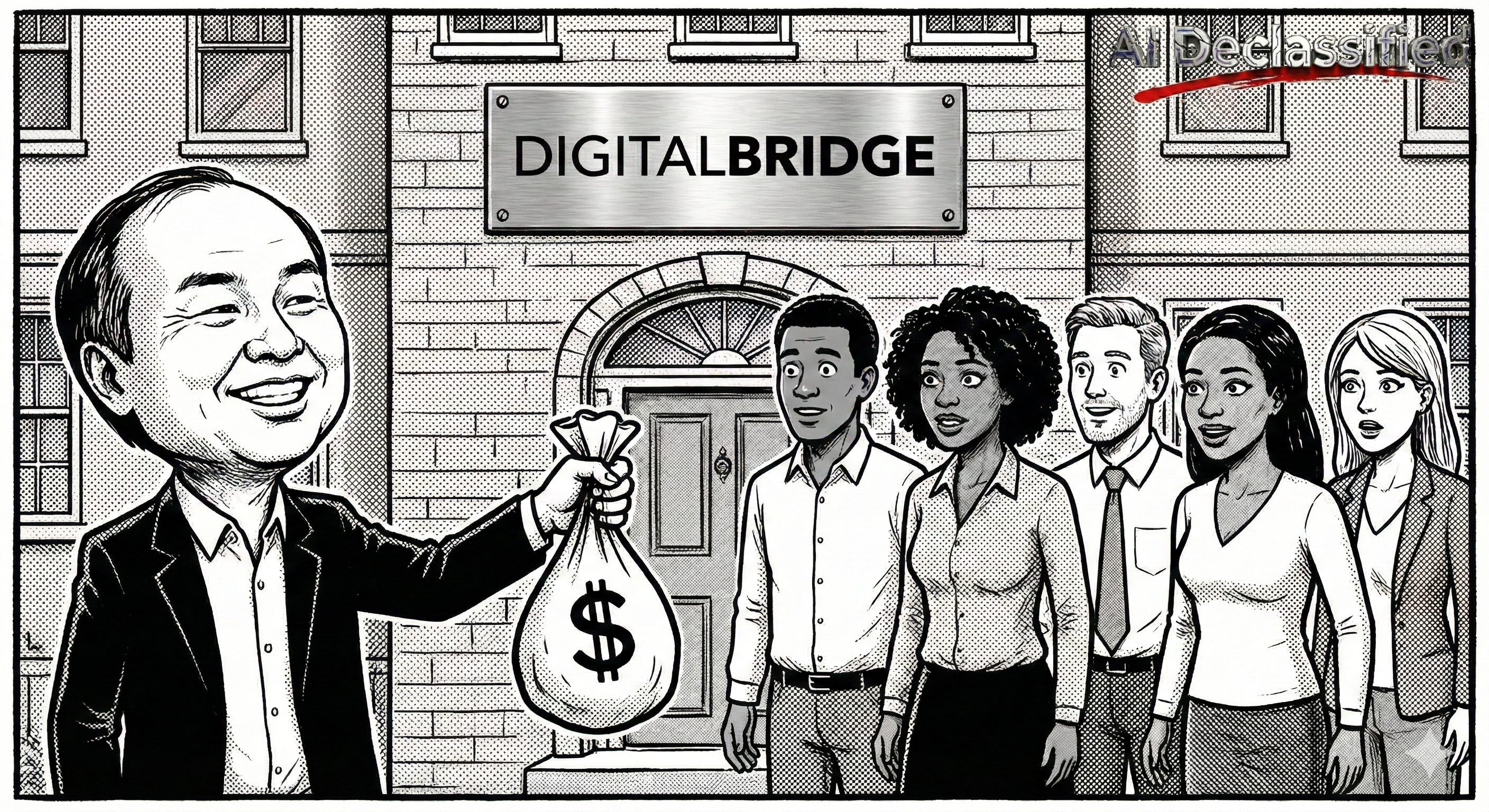
SoftBank just agreed to buy DigitalBridge for about $4B, and the chatter is “data centers are the new oil” and “everyone’s racing to own the pipes behind AI.” Some posts paint it as pure bubble behavior: big money chasing hype.
📡Signal:
AI doesn’t run on vibes, it runs on power, real estate, cooling, fiber, and financing. DigitalBridge specializes in investing in that digital infrastructure, including data centers and connectivity assets.
SoftBank says the acquisition is meant to expand its capacity for AI at scale and support next-generation AI data centers. In plain terms: they’re buying the ability to build and bankroll the physical layer models depend on.
🎯Impact:
This is a reminder that the bottleneck is shifting. As models get cheaper to copy, scarce resources become electricity, GPUs, and permitted places to deploy them (data centers).
The signal to watch isn’t the headline price; it’s whether these mega-infrastructure bets actually make it cheaper and faster for businesses to put AI into real products.
Tool Spotlight🔦
Your guide to choosing the right tools with confidence.
📍 Jasper vs Copy.ai
Introduction:
Jasper and Copy.ai are writing assistants, but have since outgrown the modest roots of “simple writing assistant” to become specialized operating systems for different business functions.
Jasper has doubled down on being the ultimate brand-controlled marketing hub, while Copy.ai has transformed into an automation-first engine for go-to-market (GTM) teams.
Platform comparison:

Verdict:
Choose Jasper.ai if you need to scale a consistent, high-quality brand voice across complex marketing campaigns. Pick Copy.ai if your priority is automating the "grunt work" of sales outreach and lead processing at a large scale.
💡Workflow Lab
Practical AI ideas to work faster and smarter.
📍Creating AI Applets
What it is:
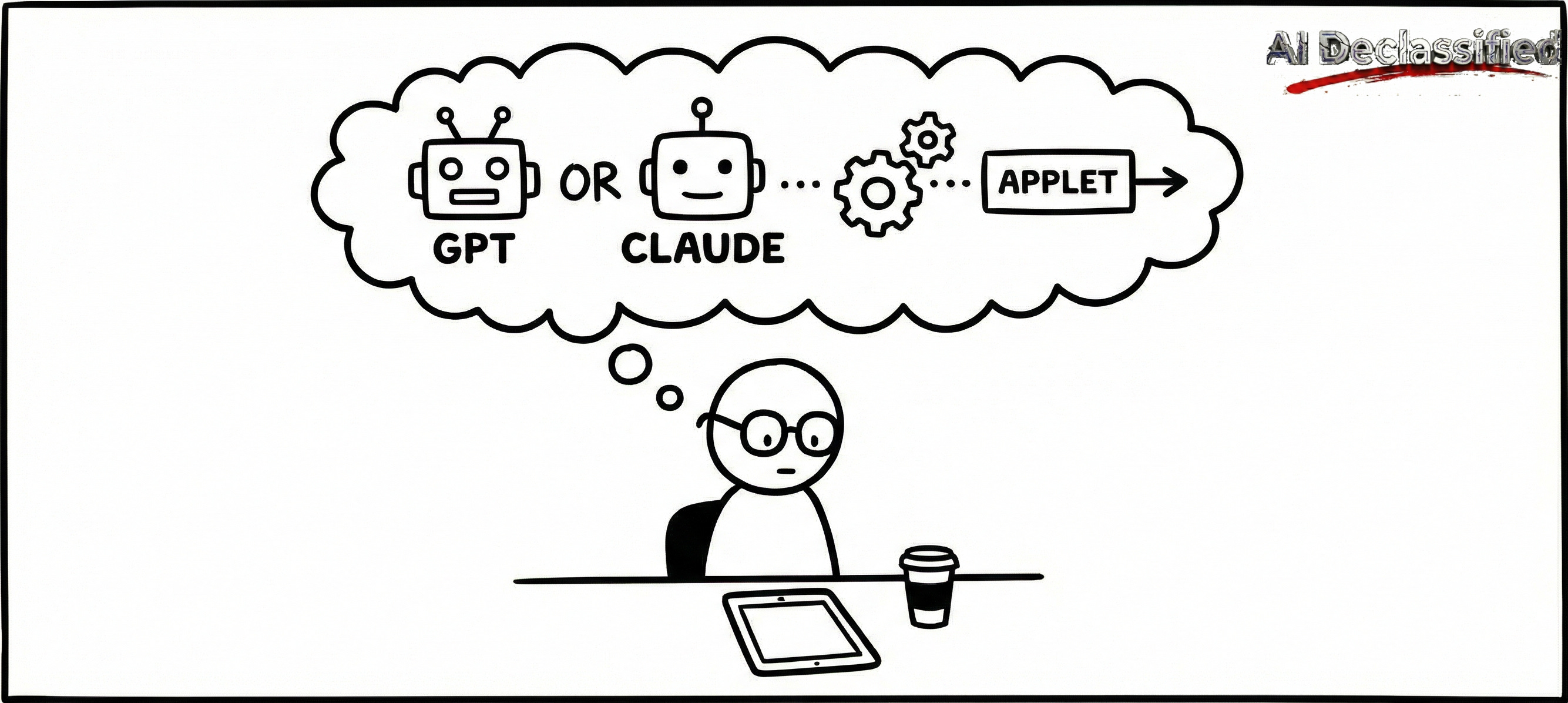
You don’t have to retype “the perfect prompt” every time you need work done. You could create a reusable setup that bakes your best instructions into a custom GPT or Claude Project, so you can run a workflow on demand with consistent output.
It’s the difference between giving directions every morning and saving the route once.
Real-world example:
It’s Friday afternoon and you need to send a project status update report, but, as usual, your notes are scattered across Slack, Teams, and half-finished thoughts on a text file.
You could copy all that into a LLM and wrestle with phrasing, tone, and formatting again, or you can build a “Status Update” applet once and always reuse it.
Now you paste raw notes and the applet produces a clean, executive-ready brief in your team’s format, with risks flagged, metrics highlighted, and any other feature you’d like to see.
You stop being the writer and become the editor, turning a recurring 30-minute drain into a 60-second finish.
How to access Custom GPT (ChatGPT) or a Project (Claude) to create an applet:
For ChatGPT:
Click Explore GPTs (or GPTs) → Create (top right corner on desktop) → Describe what you need on the Create tab, or open the Configure tab, then paste your prompt into the Instructions box and save it.
For Claude:
Open Projects → New Project → Give it a title and description, → Create Project, then click on Project Instructions and paste your prompt there.
After that, your GPT or Project will follow the saved instructions every time. Note that you can also add reference files in the setup (like PDFs, docs, or style guides), so the tool can pull from that material for more accurate, on-brand outputs.
🍵AI News Quick Hits
💰 Meta is buying Chinese-founded AI-agent startup Manus (valued ~$2–3B) to fold “general agent” tech into Meta AI.
🫱🏼🫲🏽 Nvidia just closed a $5B Intel stake purchase (filed Dec 29), turning a rivalry into a supply-chain hedge as the U.S. tries to rebuild advanced chipmaking.
🧠 Nvidia sidestepped an outright acquisition by licensing Groq’s inference chip tech and hiring its CEO/team, another “buy the brains, not the company” play.
💰 SoftBank agreed to buy DigitalBridge for $4B ($16/share) to bulk up AI data-center infrastructure, while keeping CEO Marc Ganzi to run it as a separate platform.
✍🏼 The U.S. granted Samsung and SK Hynix annual 2026 licenses to ship chipmaking tools into China, easing near-term AI-memory jitters.
📝 China’s regulator proposed draft rules for “human-like” AI that does emotional interaction, requiring addiction warnings, safety duties, and intervention when users show dependence.
🪧 Waymo’s Dec 20 SF blackout chaos (robotaxis stuck at dark intersections) reignited calls to regulate teleoperation; Waymo says fleet-wide updates are rolling out.
🫸🏼 The U.S. postponed new tariffs on Chinese “legacy” chips to June 2027 (rate TBD), temporarily holding back trade pressure while broader chip-import tariff probes loom.
🎁 Google’s Dec 29 roundup spotlights Gemini 3 Flash, new verification tools inside the Gemini app, and Gemini-powered Translate: year-end product shipping as competition heats up.
💰 India’s Coforge is buying California-based Encora for $2.35B to expand AI services and its Americas footprint, another signal that “AI consulting” is now table stakes.
What do you think of this week’s newsletter? Hit reply and let me know.
See you next week!